https://jlinteriors.com
showroom@jlinteriors.com | (561) 347 7274





Kitchen Systems
Lignum Et Lapis
Add to Wishlist
Add to Wishlist
Price available upon request
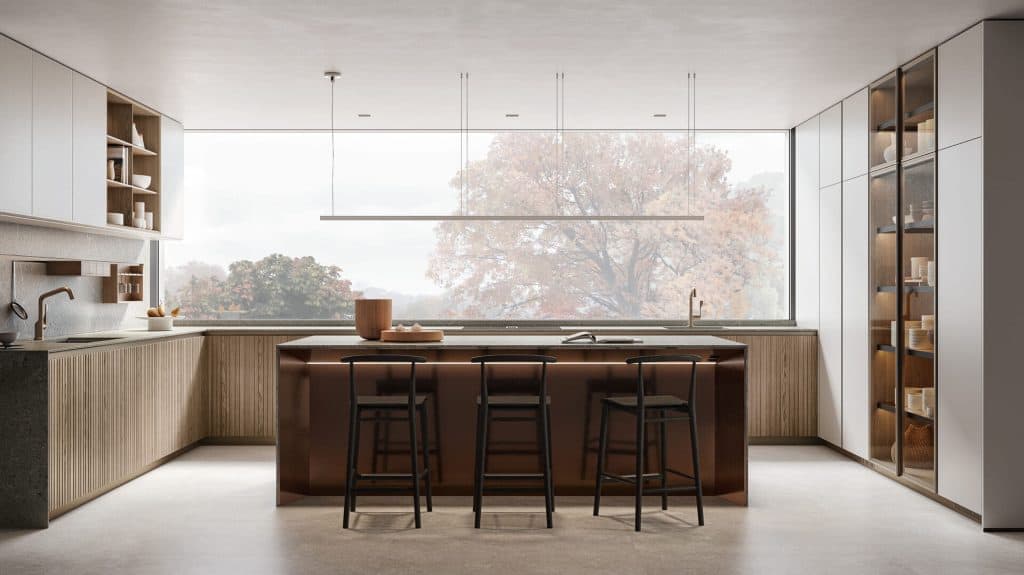
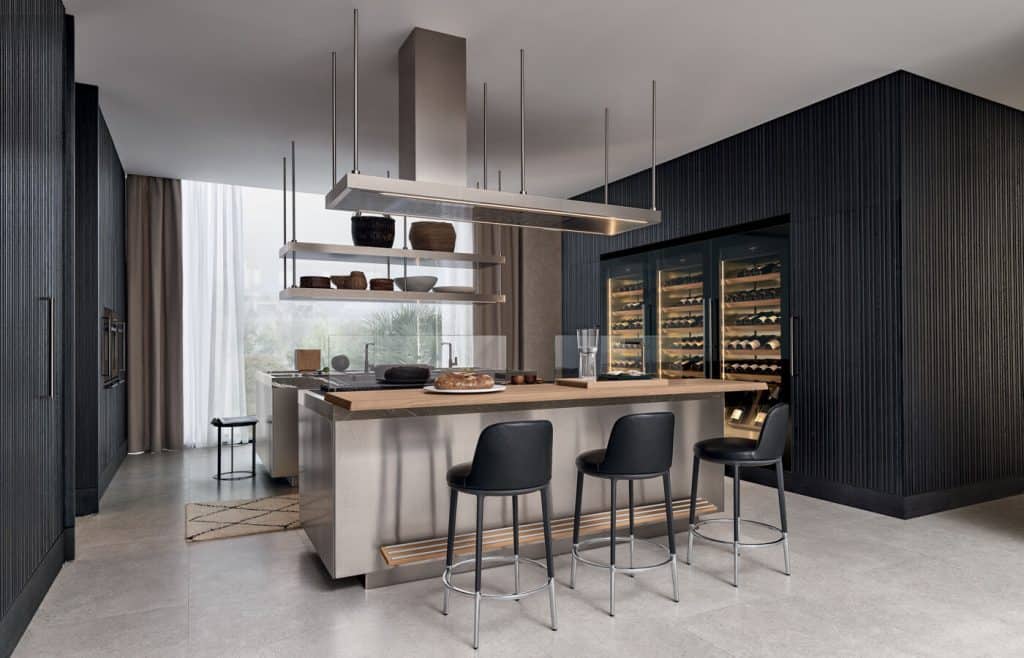
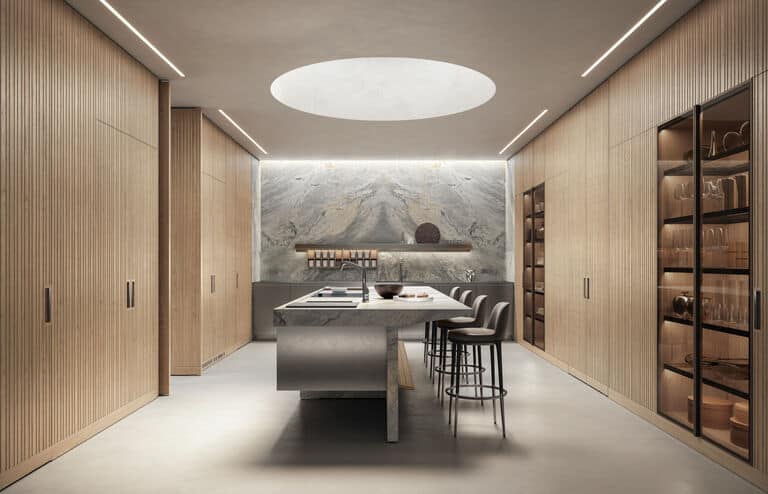
This functional and convivial island is designed to welcome guests on one side and those cooking on the other, with a worktop equipped with all the necessary equipment: cooking facilities, sink, and suspended base units. To ensure the best performance, a long steel base running along the back wall accommodates an additional operational space and support to the washing area. Completing the layout, two aesthetically impeccable equipped walls extend along the long sides of the room. These walls feature proper boiseries, enhanced by the distinctive vertical slats of the model, integrating appliances, storage units and doors that connect the kitchen with the complementary workspaces and the other rooms of the house.
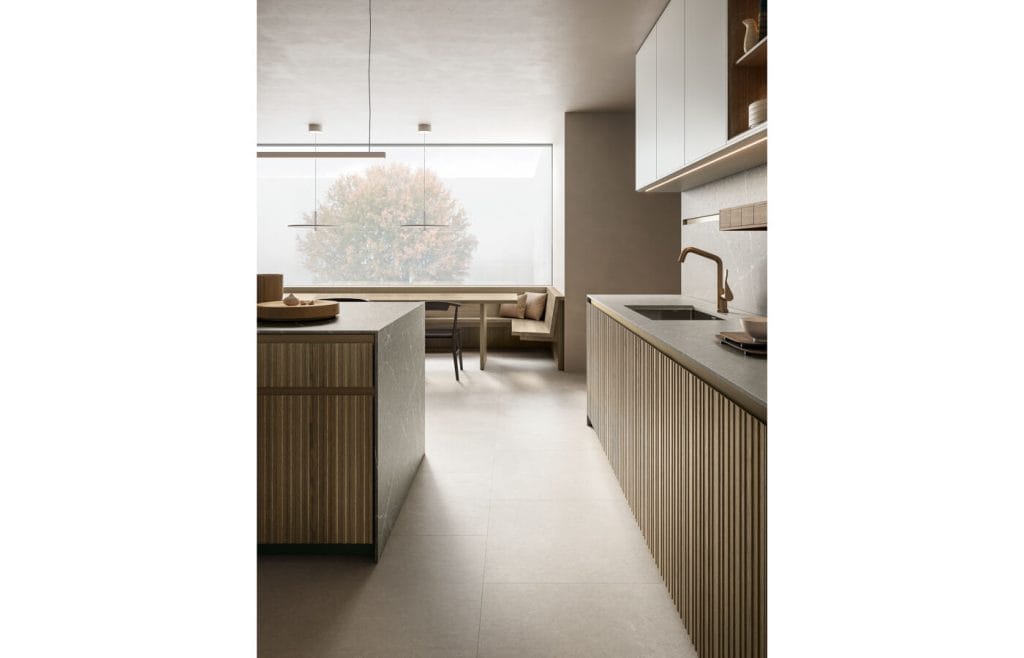
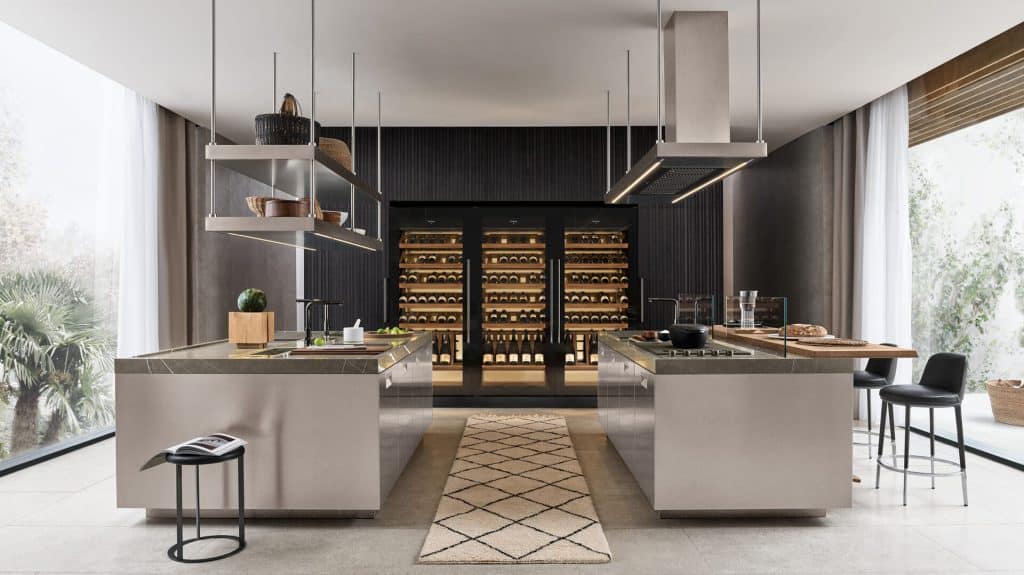
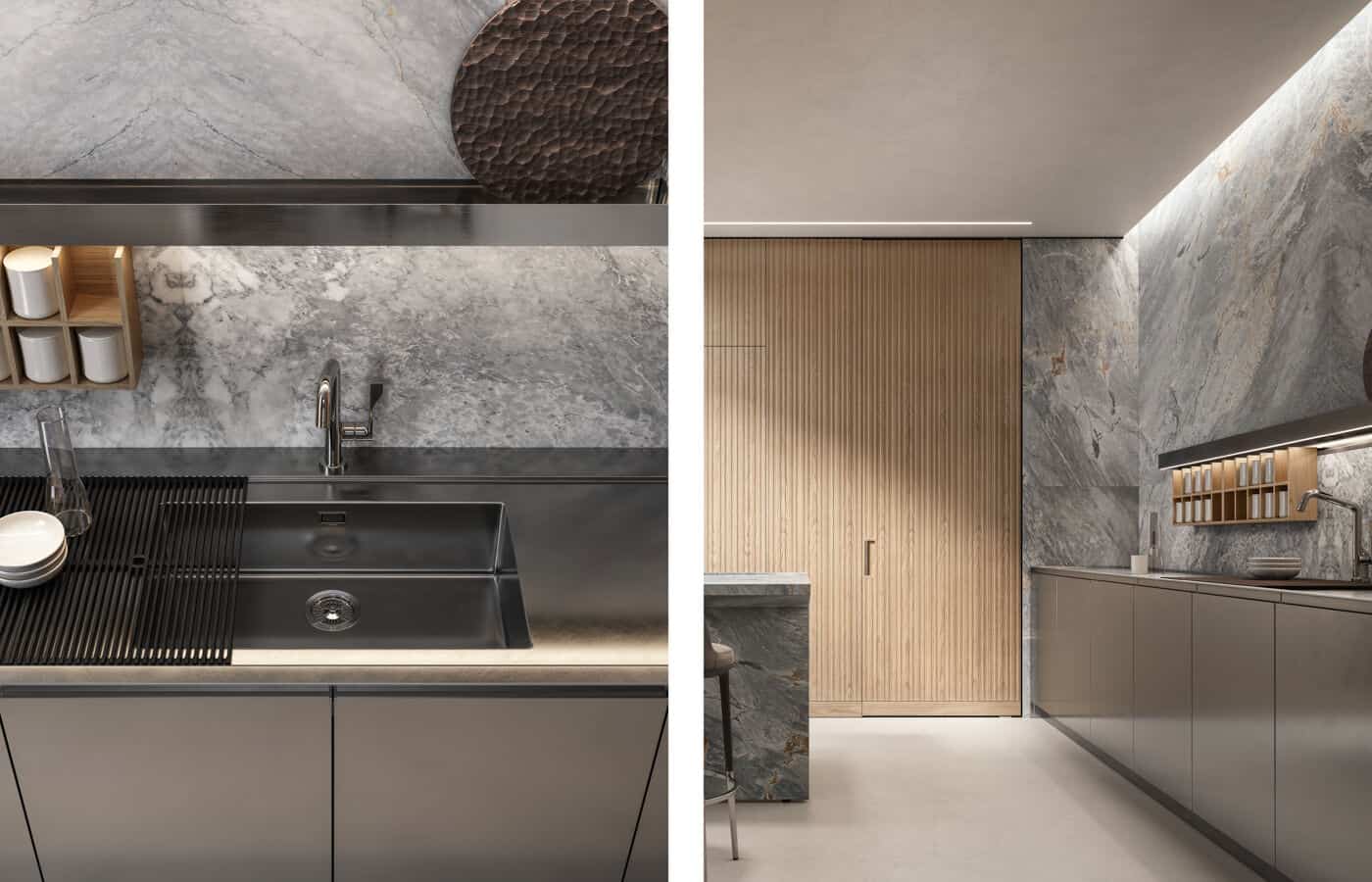
Beyond the island, the wall-integrated Frame System double central door provides access to the dining area, while two double Stopsol glass doors displaying wall units with a Brushed Bronze aluminum finish symmetrically, add to the beauty of the wall. Playing with refined and delicate combinations, the language of elegance and harmony encompasses all the materials in this environment. The dynamic texture of the NTF natural oak slatted walls contrasts with the polished Versilys grey marble of the island and back wall as well as with the delicately textured Vintage stainless steel of the bases.
Behind the island, a passage leads to an unexpected pantry. Equipped with solutions and tools for preserving various ingredients and equipment for refrigeration and cooking, it completes the project. Everything in this space is designed to create the best conditions for food preparation while sharing the experience with guests. The Pantry, kitchen, and dining room arranged in sequence are in perfect harmony with each other and open to view and use, creating a stage for the show cooking.
Technical information
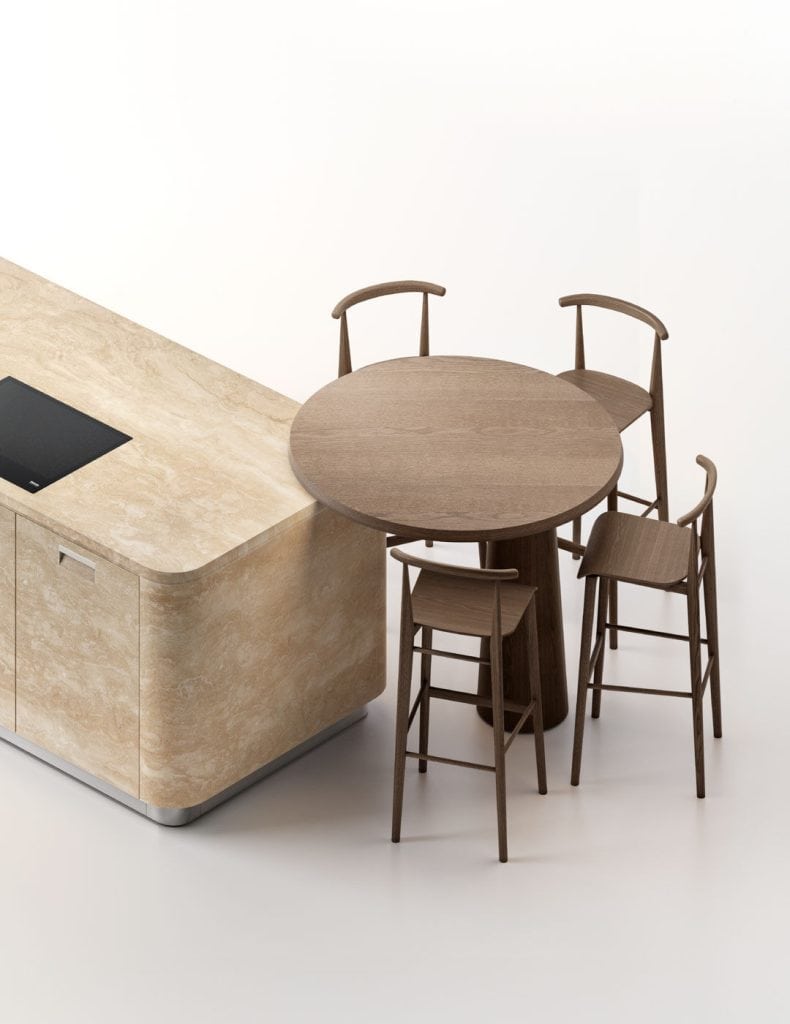
A large and exquisitely shaped marble kitchen island stands like a modern sculpture in the center of a space featuring delicate colors and geometric design. The back wall, covered with marble, and lighting from above contribute to enhancing the theatricality of the monolith, which is the protagonist of the layout. A context that highlights the pure and sophisticated quality of Lignum et Lapis, the iconic Arclinea model designed by Antonio Citterio with the purpose of concentrating the preparation of food and the art of hosting around the same element.
Download files
Brand: Arclinea
Arclinea’s identity originated in a series of values that have always been consistently dialogued. A story dating back to 1925, which transformed from “doing” to “knowhow” to then become a culture by anticipating, interpreting, and responding to changes in society and people’s behavior. Competence, acquired through the specialist production of kitchens, transforms thoughts and processes into articles that are already at their genesis as if in a unicum, connecting functionality and conviviality, practicality, and experience. A result of close links with its local area, the concept of Made in Italy championed by Arclinea is rooted in tradition, a value that no innovation can override, and an inspiration for creativity that becomes a culture of design. An ethical approach to the supply chain leads, on the one hand, to tangible sustainability in terms of product “duration” and "end-of-life" and, on the other, to attention to what is good and right for people and their environment: from tools to ingredients, starting with the kitchen.
Dimensions